
What is Kitchari ?🌿
Regina Arabia Yoga | MAR 30, 2023
kitchari
detox
ayurvedarecipe
whatiskitchari
What is Kitchari ?🌿
Regina Arabia Yoga | MAR 30, 2023
If you haven't tried this stapled recipe recommended by Ayurveda to promote easy digestion, Kitchari is delicious and nutritious for breakfast or lunch.
Follows the recipe, how to prepare and benefits.
Kitchari means mixture, usually of two grains. This is one kitchari recipe that is particularly nourishing and easy to digest. Please note the options below for some alternatives and, after the recipe, read more about this ancient dish.
Carefully pick over rice and dal to remove any stones. Wash each separately in at least 2 changes of water. Add the 6 cups of water to the rice and dal and cook covered until it becomes soft, about 20 minutes. While that is cooking, prepare any vegetables that suit your constitution. Cut them into smallish pieces. Add the vegetables to the cooked rice and dal mixture and cook 10 minutes longer. In a separate saucepan, sauté the seeds in the ghee until they pop. Then add the other spices. Stir together to release the flavors. Stir the sautéed spices into the cooked dal, rice, and vegetable mixture. Add the mineral salt and chopped fresh cilantro and serve.
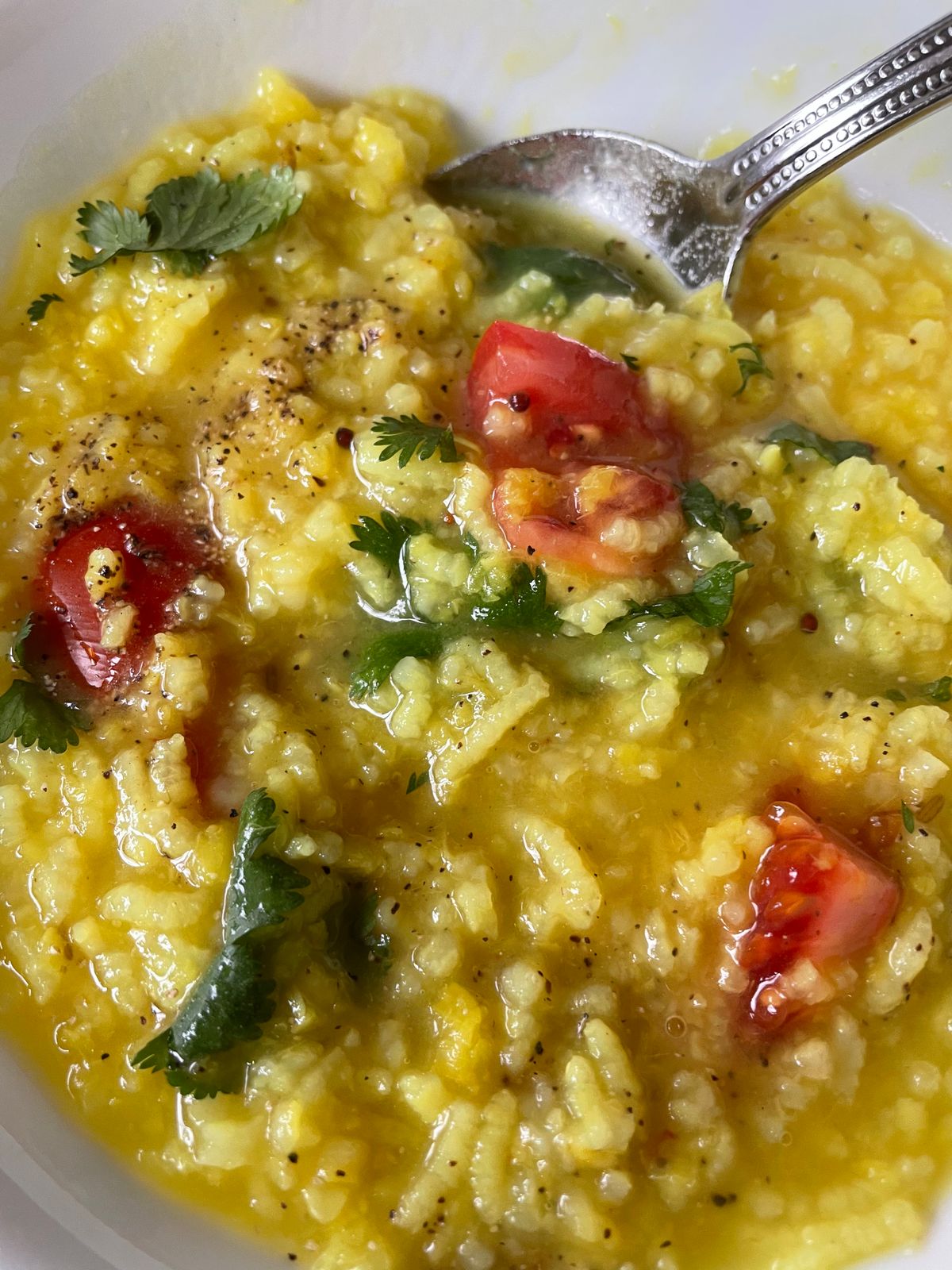
"Kitchari is basic to the Ayurvedic way of life. Composed of basmati rice and mung dal, it has as many variations as there are cooks who prepare it. A one-pot dish, kitchari originates on the Asian subcontinent and has references dating back thousands of years. The skillful use of spices and vegetables can produce balancing effects for the three bodily doshas. It has many qualities but being quick and easy to prepare makes it a popular dish for almost every lifestyle. Basmati rice and mung dal together create a balanced food that is a good protein combination and is tridoshic. This complete food is easy to digest and gives strength and vitality. It nourishes all the tissues of the body. Kitchari is the preferred food to use when going through cleansing programs. Kitchari is excellent for detoxification and de-aging of the cells. " Dr Vasant Lad.
Regina Arabia Yoga | MAR 30, 2023
Share this blog post
 OfferingTree